
The internet has changed how people buy musical instruments. Musicians no longer need to visit multiple stores to compare options. Secure online payment technology has evolved significantly across all e-commerce sectors, and innovations developed for high-transaction platforms like online casino American Express processing have raised security standards across the board. These same trusted payment methods now protect musicians purchasing instruments online.
Shopping online saves time. Buyers can browse different brands and models in minutes. They can read reviews from other musicians. This helps them make informed decisions before spending money.
Prices online are often lower than in physical stores. Online retailers have less overhead costs. They pass these savings to customers. Can you find better deals by shopping around? Absolutely.
Understanding What to Look For
Checking Product Details
Every instrument listing should include detailed specifications. Buyers need to know the materials used. They should understand the dimensions and weight. Photos from multiple angles help assess quality.
Product descriptions matter more online than in stores. Musicians cannot touch or test instruments before buying. Reading carefully prevents disappointment. Some sellers provide video demonstrations that show how instruments sound.
Reviewing Return Policies
Return policies protect buyers from making costly mistakes. Most reputable online stores offer 30-day returns. Some extend this to 60 or 90 days. Understanding these terms before purchasing is crucial.
Shipping costs for returns can add up. Some retailers cover return shipping. Others require buyers to pay. Checking these details upfront saves headaches later.
Navigating Payment Options Safely
Modern online shopping offers various payment methods. Credit cards provide fraud protection for buyers. Many platforms accept digital wallets and other secure payment options. Payment security matters regardless of what someone purchases online.
Encrypted checkout pages protect financial information. Look for the padlock icon in the browser. Legitimate retailers invest in security measures. They want customers to feel confident making purchases.
Comparing Prices Across Platforms
Different websites sell the same instruments at varying prices. Smart shoppers compare before buying. They check manufacturer websites, large retailers, and specialized music stores.
Some platforms offer price matching. Others provide seasonal discounts. Signing up for newsletters sometimes unlocks exclusive deals. Patience often leads to significant savings.
Choosing Between New and Used
Benefits of Buying New
New instruments come with warranties. Manufacturers stand behind their products. Buyers know the instrument’s complete history. Everything arrives in pristine condition.
Quality control standards apply to new instruments. Manufacturers inspect products before shipping. This reduces the chance of defects. Peace of mind has value.
Considerations for Used Instruments
Used instruments cost less than new ones. Many vintage instruments have excellent sound quality. Some musicians prefer the character of older instruments.
However, used instruments carry risks. Previous owners might have caused damage. Repairs can be expensive. Photos don’t always reveal problems. Is the savings worth the risk? That depends on the buyer’s experience level.
Reading Reviews and Ratings
Customer reviews provide valuable insights. Real musicians share their experiences. They discuss sound quality, durability, and value for money.
Look for patterns in reviews. One negative review might be an anomaly. Multiple complaints about the same issue signal a problem. Professional reviews from music magazines add another perspective.
Star ratings offer quick assessments. But reading actual comments provides context. Some instruments work better for beginners. Others suit advanced players. Reviews help match instruments to skill levels.
Understanding Shipping and Handling
Instruments are fragile. Proper packaging prevents damage during shipping. Reputable sellers use specialized boxes and padding. They understand how to protect delicate items.
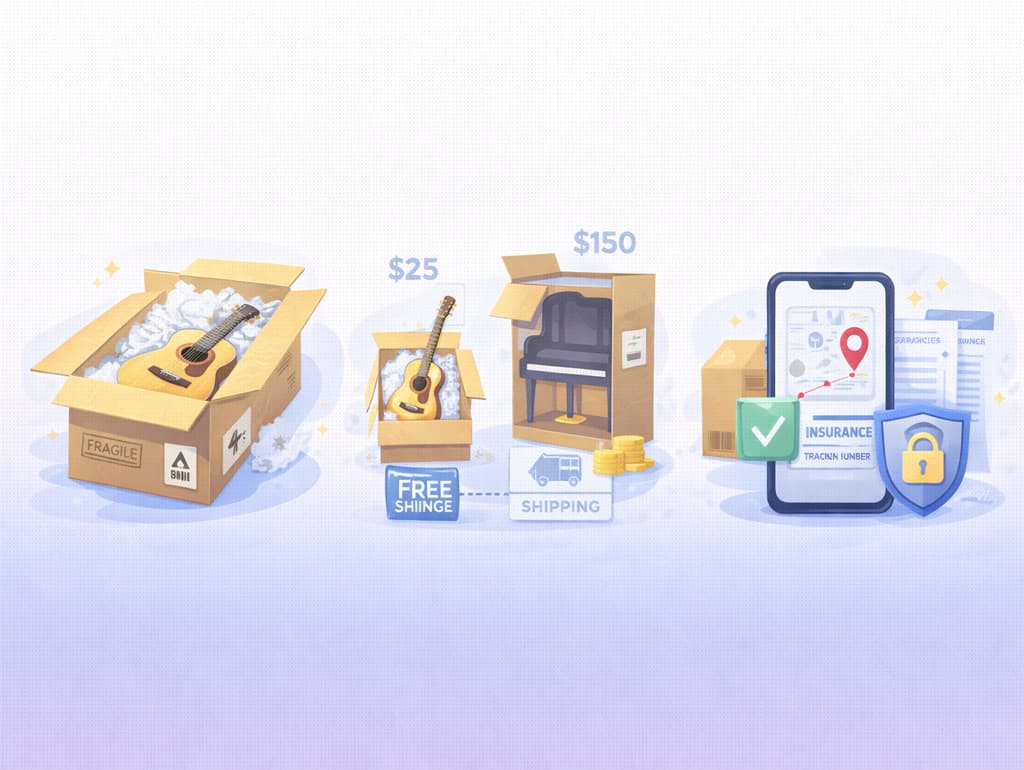
Shipping costs vary based on size and weight. Guitars cost less to ship than pianos. Some retailers offer free shipping for orders above a certain amount. Factoring these costs into the total price helps compare deals accurately.
Tracking information lets buyers monitor deliveries. Insurance protects against losses or damage to shipments. These features provide peace of mind during the waiting period.
Getting Started with Your Purchase
Here is a quick guide:
- Start by researching the instrument type needed. Beginners have different needs than professionals. Budget determines available options. Setting realistic expectations prevents disappointment.
- Make a shortlist of potential instruments. Compare features and prices. Read reviews for each option. Narrow down to the top choice.
- Before clicking buy, verify the return policy. Check the warranty terms. Confirm that the payment method feels secure. Then complete the purchase with confidence.
Online shopping for musical instruments works well when approached carefully. Taking time to research pays off. The right instrument at a fair price awaits those who shop smart.